

Transform Alphabet Learning with Classroom Rugs
Discover how strategic rug placement and movement-based activities create powerful learning moments. This comprehensive guide shows educators exactly how to turn a simple classroom rug into an engaging alphabet learning hub that keeps children excited and focused.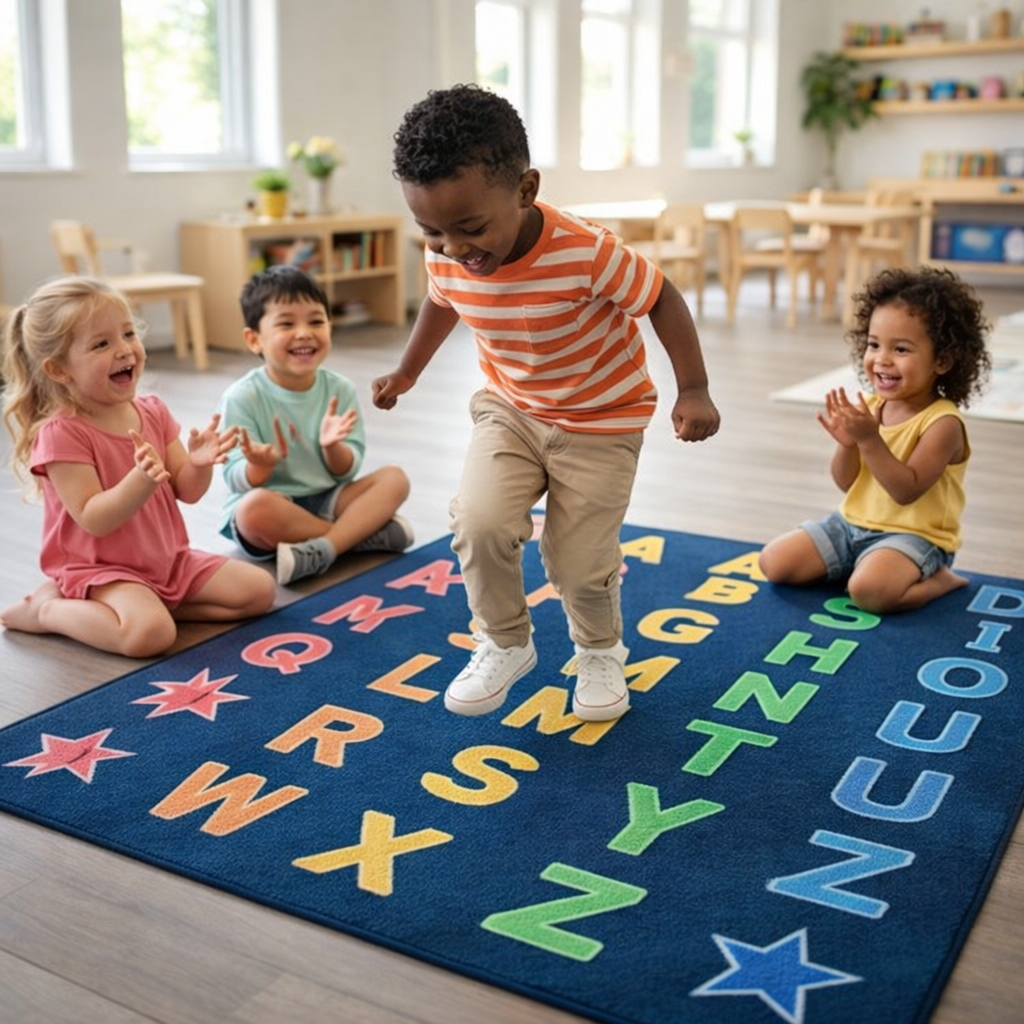
Why Classroom Rugs Transform Learning
Movement, visual anchors, and structured routines create the ideal conditions for alphabet mastery.
Movement Builds Memory
Physical activity strengthens neural pathways, making letter recognition and sound association stick longer.
Flexible Grouping
Teach whole group, small groups, or one-on-one on the same surface—adapting to every learner's needs.
Clear Boundaries
Defined sitting spots reduce behavioral issues and help children focus on the learning task at hand.
Visual Anchors
Bold letters, colors, and picture icons create quick recall and make learning feel intuitive and fun.
Setting Up Your Rug for Success
The foundation of effective rug-based learning starts with thoughtful setup. Before you introduce any activities, take time to establish a learning environment that supports focus, safety, and engagement.
Daily Five-Minute Routines That Deliver Results
Short, predictable routines are the secret to consistent progress. These three core activities take just five minutes but build strong letter recognition and sound awareness when practiced regularly.
Sound of the Day
Tap and Tell
Echo and Point
High-Energy Games That Teach
Mix these games throughout the week to keep energy high and learning fresh. Each game reinforces different aspects of alphabet mastery while keeping children engaged and excited.
Alphabet Walk
Place letter cards around the rug. Play music for ten seconds, then call a sound. Students step to that letter, say the name, sound, and a word that starts with it.
Sound Hopscotch
Mark three boxes with tape: letter, picture, blank. Call a sound—students hop from letter to picture to blank, then shout a new word that fits.
Mystery Letter Hunt
Hide three letter cards under seats or cones along the rug edge. Give clues like 'my sound is at the start of sun.' Students find and match cards to a chart.
Rhyme Time Relay
Place rhyming picture pairs on opposite sides (cat/hat, log/dog). Call a letter sound—teams race to touch the matching picture, then find its rhyming partner.
Build a Word Bus
Line up three seats as C-V-C (consonant-vowel-consonant). Students become letter 'passengers' boarding in order to make words (map, mop, hop). Class reads as the 'bus' moves.
Letter Yoga
Students use their bodies to form letters on their spots. Keep it gentle and fun. Hold for five counts, then switch. Links shape, sound, and self-control.
Supporting Every Learner
Classroom rugs create a flexible learning space where you can differentiate instruction and meet individual needs without leaving the group.
Sensory Seekers
Allow a wiggle cushion or fidget in one hand while the other traces letters. Movement and tactile input help them focus.
English Language Learners
Pair every letter with a clear image (N with nest, T with tree). Speak slowly, show mouth position, and have peers echo for reinforcement.
Speech and Language Goals
Focus on target sounds in isolation first, then in simple words. Use the rug as a safe, low-pressure practice stage.
Students Needing Extra Time
Keep a 'quiet corner' on the rug with a simple visual schedule and soft timer. This provides a calm space without removing them from the group.
Quick Checks and Simple Assessment
Track progress without formal testing. These quick, informal checks give you real-time insight into who's ready to move forward and who needs more practice.
Thumb Check
Thumbs up if you hear /s/ at the start of sun, sideways if unsure, down if not. Instant visual feedback for the whole group.
Rug Exit Ticket
Hand each child a letter card as they line up. They state the name and sound before leaving. Quick one-on-one check.
Sound Sort
Place three letter anchors on the rug. Students place picture cards under the right sound, then read the piles with a partner.
Name the Path
Tape a three-letter path on the rug (map → mop → top). Students step and say each sound, then blend at the end.
Classroom Management Tips for Smooth Learning
A well-managed rug environment keeps distractions minimal and learning time maximum. Here's how to establish routines that work.
Teach Rug Rules Explicitly
- Eyes on speaker
- Seat on spot
- Hands to self
- Practice, celebrate, repeat
Use Call and Response
- You say 'A, B'
- Class answers 'C'
- Then quiet
- Builds focus and rhythm
Move by Color or Row
- Prevents crowding
- Orderly transitions
- Reduces behavior issues
- Keeps pace calm
Time It with a Sand Timer
- 30-second timer for transitions
- Sets calm pace
- Visual countdown
- Reduces anxiety
Adding Writing Without Leaving the Rug
Integrate fine motor practice seamlessly into your rug time. These low-pressure writing activities build letter formation skills while keeping children engaged.
Sky Writing
Arm out straight, write big letter strokes in the air while saying the sound. Builds muscle memory and confidence before pencil work.
Dry Erase Boards
Quick practice of two letters per day. Focus on start point and direction. Erase and repeat for instant feedback.
Letter Paths
Tape simple arrows on a corner of the rug to guide top-to-bottom and left-to-right strokes. Visual scaffolding for proper formation.
Extending Learning at Home
Partner with families to reinforce classroom learning. These simple ideas help parents support alphabet development at home.
Rug Recap
Send a short note or email with the week's three focus letters and one home game. Families can replicate it on their living room floor.
Take a Picture
Snap a photo of the rug game and share it in your class app. Visual examples make it easy for families to understand and recreate activities.
Alphabet Playlist
Share two clean letter-sound songs for practice at home. Music reinforces learning and makes practice fun.
Choosing the Right Rug for Alphabet Work
Not all rugs are created equal. When selecting a classroom rug for alphabet learning, prioritize these key features.
Size and Seating
Make sure everyone gets a defined spot. Circles or squares keep order and prevent crowding.
High Contrast Letters
Bold shapes read well from every angle. Children at the back need to see letters as clearly as those in front.
Durable and Easy to Clean
You will use it every day. Choose materials that withstand regular cleaning and heavy use.
Calm Color Story
Friendly, balanced colors reduce visual noise and help children focus on the learning task.
A Sample Week at a Glance
Here's how to structure your week to balance routine, games, and assessment while keeping learning fresh and engaging.
Monday
Sound of the Day
Alphabet Walk
Dry Erase Practice
Tuesday
Tap and Tell
Sound Hopscotch
Exit Tickets
Wednesday
Echo and Point
Mystery Letter Hunt
Name the Path
Thursday
Letter Yoga
Build a Word Bus
Sound Sort
Friday
Review Games
Student-Led Choice
Family Photo Share
Ready to Transform Your Alphabet Instruction?
Explore SensoryEdge classroom rugs designed specifically for alphabet learning. Bold letters, calm colors, and perfect sizing make every rug activity smooth and engaging.